
The Face of Truth | Ibrahim Shglawi Sudan… The Failure to Tame International Platforms

The Security Council session held on August 24 concerning Sudan, if we set aside the statements and interventions, revealed a contest over how to define the crisis, assign responsibility for its continuation, and determine the tools of influence over its course and the balance of power and influence within it.
There is no doubt the session mattered for Sudan. The United States pushed to expand the arms embargo imposed under Resolution 1591 to cover all of Sudan, including drones and related technologies, while strengthening sanctions-monitoring mechanisms. On the surface, the proposal appears consistent with the rhetoric of protecting civilians and ending the war. But international policy is read through its likely effects, its timing, and the balance of power it may produce.
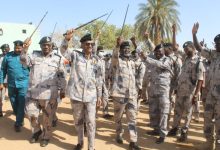


A comprehensive embargo may appear equal in text, but it is not equal in effect: it constrains the army leading a war against an insurgency, while the insurgency relies heavily on cross-border arms and financing networks. This raises an important question: is the goal to dry up the sources of the war, or to recalibrate its balance?
This point becomes more significant when the proposal is linked to realities on the ground. The Rapid Support Forces have for some time faced military and political pressure, a decline in their ability to hold the initiative on several fronts, alongside internal divisions and a weakening capacity to sustain the war at its previous pace. In such a situation, political, diplomatic, and sanctions tools become more important than weapons, since external pressure can become a means of reshaping the war’s balance when it becomes difficult to change outcomes on the battlefield.
Notably, there is an overlap between the American and Emirati approaches to Sudan—not only in statements, but in an integrated trajectory: pressuring the state, internationalizing sanctions, focusing on drones, and portraying the war as a conflict between two equivalent parties. The result is that this overlap, whatever its motives, effectively works to blur the political and legal distinction between the state and an armed force in rebellion against it.
Herein lies one of the gravest issues in the Sudanese scene: redefining the war may sometimes matter more than trying to end it. If the army and the Rapid Support Forces are presented as two equal parties, the nature of the state itself becomes negotiable, and weapons become a tool of political equalization rather than an instrument of war. The call for international neutrality then shifts from a principle meant to protect civilians into a tool for re-engineering the balance between the state and the militia.
Khartoum, however, rejected this equation. At the Security Council, Ambassador al-Harith Idris stressed that the armed forces are not an armed group or an entity parallel to the state, but the legitimate national military institution—warning that subjecting it to the same sanctions imposed on militias effectively places the state and those rebelling against it on the same footing, striking at the core of national sovereignty.
The issue, then, is not merely rejection of sanctions, but rejection of erasing the legal and political distinction between the state and an armed force rebelling against it—since justice does not mean equating two entities that differ in nature and legal standing.
The same applies to the drone file. Targeting civilians, markets, schools, and hospitals is a crime demanding accountability, but placing every use of drones in one basket—without distinguishing between targeting civilians and targeting an armed force—turns neutrality in wording into bias in effect. From here, Khartoum’s question moves beyond objecting to sanctions to a more fundamental one: does the international community want to end the war, or to reshape its balance?
If the goal is to end the war, the response must begin at its sources of strength: weapons, financing, mercenaries, and cross-border supply networks. Restricting state institutions while leaving these sources active may prolong the conflict rather than end it, and may redistribute the balance of power. This is where the positions of Russia and China reveal the limits of imposing a single approach: Moscow rejected expanding sanctions and automatically equating the armed forces with the Rapid Support Forces, while Beijing warned against excessive sanctions, affirming that priority should go to peace, stability, and respect for Sudan’s sovereignty.
The positions of Egypt, Saudi Arabia, and Pakistan likewise reflected, to varying degrees, a commitment to Sudan’s unity, sovereignty, and national institutions, and a rejection of treating the state and the militia as equivalent entities. This may not amount to a complete alliance, but it confirms that the proposed approach toward Sudan does not enjoy international consensus, and that the dispute over tools of pressure is, at its core, a dispute over the shape of any settlement and its balance.
Herein lies the paradox: the wider the attempt at internationalization grows, the wider the disagreement over it becomes. Sudan sits at the intersection of competing interests, which means that pushing international platforms toward a single narrative of the war collides with a plurality of views and interests. This is the meaning of “the failure to tame international platforms”: not the fall of a resolution, but the impossibility of a single approach to it—since the Security Council did not produce a consensus equating the state with the militia, and the discussion did not turn into a resolution, while the Russian, Chinese, and regional positions exposed the limits of any single party’s ability to shape the international course.
Yet this is not a final victory for Sudan. International pressure remains, and its tools remain escalatable. Wisdom, therefore, does not lie in celebrating the positions of friends or antagonizing adversaries, but in investing in international divergence to build a balanced and independent foreign policy—one that fortifies Sudan’s position rather than leaving it hostage to external rivalries.
Sudan needs to make its national interest the axis of its relations with everyone. It can cooperate with Russia, China, Egypt, Saudi Arabia, Turkey, and Pakistan, while maintaining its channels with the United States and Europe, according to a clear principle: no one defines Sudan’s interest on behalf of Sudanese people.
And if the United States wishes to regain the trust of Sudanese people, it must respect their will and reconsider its definition of the war based on the tragedies and violations they have actually lived through—not on narratives that equate the state with a militia that rebelled against it.
In conclusion, according to #FaceOfTruth, our country’s crisis reveals that internationalizing the war does not necessarily mean unifying the international position, and that the attempt to tame external platforms collides with conflicting interests. Yet Khartoum should not settle for merely resisting the pressure; it must build its national narrative on evidence, pursue the sources of arms and financing, and remain open to everyone without being bound to any single axis. And international powers, foremost among them the United States, must respect the will of the Sudanese people and read the war through the tragedies and violations they have lived, not through narratives that equate the state with the militia. At the same time, sovereignty remains tied to reform, civilian protection, and justice. In the end, the solution is Sudanese: a state that monopolizes weapons, politics settled through dialogue and elections, crimes held accountable under the law, and a decision that remains with the people.
Stay well.
Wednesday, August 26, 2026. Shglawi55@gmail.com