
Face of Truth | Dr. Ibrahim Shaglawi Immanuel Kant and Al-Tijani Al-Mahi Psychiatric Hospital

What if the German philosopher Immanuel Kant were to return to life and sit at the entrance gate of Al-Tijani Al-Mahi Psychiatric Hospital in Omdurman? Perhaps he would find, in the queues of patients, a question that goes beyond the boundaries of philosophy: How can peace be achieved while the people of Sudan continue to carry the pain and horrors of war in their memories, their nerves, and the details of their daily lives?
Bringing together a philosopher who lived in the eighteenth century and a psychiatric hospital in Omdurman may seem far-fetched. Yet, in my view, what connects them is the question of peace, the very question that occupied Kant in his intellectual and humanitarian project known as “Toward Perpetual Peace.” Today, this question has become more pressing in Sudan, where war is no longer merely a military confrontation, but an extended human experience that has left its impact on people’s souls before buildings and streets.
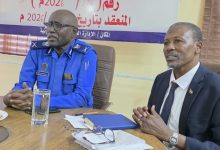
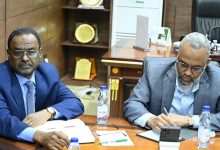

Dr. Mai Mohamed Yousif, Director of Al-Tijani Al-Mahi Hospital, confirmed on Tuesday that the average number of patients attending outpatient clinics has risen to between 70 and 80 cases per day, compared to approximately 60 previously, with the number exceeding 100 on some days. She explained that the increase in attendance coincides with citizens returning to the capital, and expected it to continue as more Sudanese return from abroad.
These figures offer a window through which we can glimpse the other face of war: destruction that does not feature in news bulletins, but instead settles deep within the human being. Those who have been subjected to torture and violations, those who have experienced displacement and the loss of security, and those who have watched their lives collapse before their eyes do not all return to their homes in the same psychological condition in which they left.
But who is responsible for the destruction and devastation inflicted upon the souls of Sudanese people and the details of their lives, stripping them of security and stability? This moral question extends beyond the responsibility of healthcare institutions to a political elite that failed to manage its differences and failed to make politics a means of achieving consensus and the peaceful transfer of power. Instead, it brought military force into the struggle for power and used the Rapid Support Forces militia as a card in its political calculations, rather than building a national project that unites everyone around the homeland and protects the state from sliding into the abyss.
Perhaps Mariam Al-Sadiq Al-Mahdi’s remarks about developing options, during the impasse in the political process, reveal something of the mindset that prevailed during that period. When politics fails to produce consensus and armed force is brought into the equation of power, the nation becomes hostage to calculations of betrayal and abandonment. The war of April 15, 2023, embodied the catastrophic cost of this approach, as disagreements turned into an open war whose price Sudanese people paid in their security, homes, and psychological stability. Therefore, the elite whose choices and practices contributed to creating the conditions for the explosion cannot evade their historical responsibility or speak of recovery without accountability or a fundamental review of their past.
Here, we recall Kant, who understood that peace is not achieved merely through the absence of war, but requires a political, legal, and moral foundation that guarantees its continuity. In his project, Toward Perpetual Peace, peace was not a temporary truce between adversaries, but a system founded on the rule of law, respect for rights, and transcending the logic of unrestrained force. From this perspective, the difference between ending a war and making peace is like the difference between clearing a battlefield and restoring life to society.
Yet recovery does not begin in hospitals, but with healing people’s souls and restoring the cohesion of a society torn apart by war. This calls for a national project for psychological and social healing, in which the roles of the state, universities, media, culture, and the arts complement one another. The media must move beyond the memory of battles and polarization towards the battle for awareness, dismantling hate speech and restoring trust among Sudanese people. Meanwhile, drama, theatre, and the arts can become tools for healing collective memory and reviving the values of solidarity and belonging. Rebuilding Sudan is not complete merely by reconstructing what the war destroyed, but by restoring the human being, their security, trust, and hope.
Universities and research centers must also fulfill their responsibilities by transforming knowledge into community action through studying the psychological and social effects of war, training qualified personnel, and launching support and recovery programs. Knowledge that does not champion society’s concerns or engage with its wounds loses the essence of its national mission.
From the perspective of #Face_of_Truth, the figures from Al-Tijani Al-Mahi Hospital place Kant’s project of perpetual peace before an exceptionally harsh Sudanese test. When the elite fails to manage its differences, society pays the price of that failure through its nerves, memory, and future. It is not enough for the war to stop on the battlefield while it continues inside those who lived through it. Our country today needs a different kind of national struggle, one that mobilizes the media, arts, education, culture, and awareness to restore the human being. For peace is not complete until the right to peace of mind and life is restored.
Wishing you continued well-being and good health.
Thursday, November 19, 2026
Shglawi55@gmail.com