
The Truth Face | Ibrahim Shaghlawi Localities as the Foundation of the New State

After war, the question of the state is no longer a question of power and governance, but a question of capacity for transition. A state emerging from conflict is not measured by what it declares in central policies, but by what actually reaches the citizen in their livelihood, water, health, and security in residential neighborhoods. It is precisely here that Sudan is fighting its real battle: the battle of the local economy as the cornerstone of rebuilding the state.


Historical experience has proven that reproducing a centralized economy, no matter how well-intentioned, leads only to renewed fragility. A center that monopolizes resources and decision-making reproduces the very imbalances that ignited crises. Therefore, the bet this time must shift toward localities, as the administrative units in which the relationship between the state, society, services, and security is reshaped.
The most dangerous challenge facing the post-war phase is to treat recovery as a top-down process, while reality demands an inverted approach: from the base to the summit. Popular markets, urban agriculture, small crafts, and the organization of daily services are not merely livelihood details; they constitute the structure of the real economy that protects social stability and prevents the return of tensions.
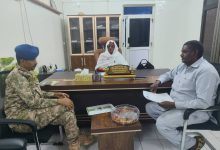
In contrast, the movements witnessed in some states earlier, and over the past days, reveal a practical awareness that the locality is no longer merely a lower administrative unit, but has become the real arena in which the relationship between the state and society is reformulated. In Khartoum, the Governor of the State, Mr. Ahmed Othman Hamza, directed the executive directors of the localities to activate the role of administrative units.
This also included organizing popular markets, sustaining waste collection, ensuring the flow of water and transportation, and emphasizing the role of locality security committees in maintaining security during periods of high population density. These directives, in essence, are not related to managing a phase or circumstance, but reflect a political and developmental understanding that organizing popular markets, containing the informal economy, and securing public space are tools of stability as much as they are services, and that their absence opens the door to chaos and tension.
Earlier, in Kassala State, the Governor of the State, Major General Al-Sadiq Mohamed Al-Azraq, received the Director of the Sudanese Standards and Metrology Organization branch and emphasized the importance of tightening coordination between the authority and the localities. This discussion carries a calculated political significance, as consumer protection, weight control, and quality assurance are not procedural matters, but essential components in rebuilding trust between the citizen and the state. An unregulated market generates a persistent sense of injustice, while a fair market restores consideration for the idea of a state that protects gains, not one that levies arbitrary exactions.
In a related context, during recent field inspection tours, the Governor of River Nile State, Dr. Mohamed Al-Badawi Abdel-Majid Abu Qurun, stressed the priority of addressing water and health problems, and issued urgent directives to localities and administrative units to accelerate solutions, in coordination with the Water Authority and Civil Defense, with expansion in the use of solar energy for water stations and health facilities. He also called on locality leaders to conduct field visits, communicate directly with citizens, and form emergency rooms to monitor the flow of services.
This new approach reflects an awareness that one of the roots of the Sudanese conflict lay in the disconnection of the state from society, and its transformation into a distant entity that appears only at moments of taxation or crises, and that rebuilding trust begins with the presence of the state in the details of daily livelihood and services, and the enhancement of earning opportunities.
The same applies in Al-Jazirah State, where, just yesterday, the Governor of the State, Al-Tahir Ibrahim Al-Khair, announced the continuation of environmental sanitation campaigns and the control of disease vectors, with the participation of the army, police, intelligence, and the local community.
The common denominator among these models, despite their differing contexts, is the shift of the center of gravity from an abstract state to a locally rooted state. When markets, water, electricity, and health are managed from within the locality, with an understanding closely linked to its social and economic reality, the gap between city and countryside narrows, the causes of marginalization recede, and the local economy is reintegrated as a developmental lever rather than a burden on national planning. If this approach is entrenched as a strategic option,
its impact will go beyond improving services to reshaping the structure of the state. Politically, legitimacy is built on performance rather than rhetoric, and centers of tension recede. Socially, networks of solidarity are strengthened and the role of youth and women expands.
Developmentally, sustainable, low-cost local solutions take root. Economically, empowering localities broadens the productive base and achieves cumulative, balanced growth that is more resilient and productive.
According to The Truth Face, the idea returns to its origin and meaning: localities as the foundation of the new state, as a political and developmental option to transcend the roots of conflict and build a state different in its logic and function. A state that begins where people live, whose strength is measured by the regularity of their daily lives, and whose legitimacy is derived from service and justice, not from control and rhetoric. This approach alone is capable of being more solid, more just, and more sustainable in post-war Sudan.
Wishing you continued well-being and good health.
Saturday, January 10, 2026
Shglawi55@gmail.com