
Truth Perspective | Ibrahim Shiglawi Political Settlement Between Coercion and Sovereignty

Our country today stands at a critical political juncture, one that goes beyond the boundaries of the ongoing war since April 2023, reaching the very structure of the state, the scope of its sovereignty, and the nature of the potential political settlement, amid an unprecedented overlap of circumstances, most notably the challenges of a troubled domestic situation and escalating international and regional pressures driven by vested interests.
In this context, the meeting between President Abdel Fattah Al-Burhan and the United Nations Secretary-General’s Special Envoy, Pekka Haavisto, acquires significant importance, as it coincided with intensive international efforts led by the Quint Mechanism, which includes the United Nations, the African Union, IGAD, the League of Arab States, and the European Union, within a framework aimed at shaping a new political path for the post-war period.

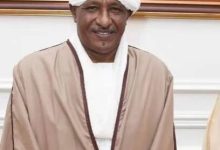

The UN envoy briefed the Sudanese leadership on the outcomes of the Addis Ababa consultations held between June 3 and 5, 2026, as well as the results of the Berlin Conference last April. Discussions focused on developing a civilian-oriented transitional framework supported by international monitoring mechanisms and specific timelines, reflecting a gradual shift from mediation to participation in designing the contours of the forthcoming settlement.
In parallel, a joint international statement was issued yesterday by the United States and several European countries, along with the African Union, the European Union, IGAD, the League of Arab States, and the United Nations. The statement emphasized ending the war, the necessity of an urgent humanitarian truce, and advancing a civilian political process leading to a transition with a defined timeframe. It also called for an inclusive Sudanese dialogue under international sponsorship and linked political progress to the international community’s stance toward the various parties.
Despite the statement’s affirmation of Sudan’s unity and sovereignty, it clearly reflects growing international pressure aimed at moving from crisis management to influencing the formulation of the settlement path according to a vision that excludes certain Sudanese political forces.
Here, the equation of coercion and sovereignty manifests itself in its clearest form. Sudan is operating within an ambitious international environment seeking to end the war and engineer state-building, while at the same time insisting on its sovereign right to manage its political course without external tutelage or foreign restructuring of its national institutions. Between these two directions lies a cautious negotiating space where humanitarian considerations intersect with geopolitical calculations and where the boundaries of international mediation are being redefined.
However, understanding the scene remains incomplete without recognizing the evident transformation within Sudanese society, which is no longer merely observing events but has become a principal actor in shaping political and social positions. Civil, community, and professional forces have emerged, clearly aligning themselves with the option of preserving the state and its institutions and rejecting any approach that equates the state with the militia, especially in light of the widespread violations against civilians in Khartoum, Darfur, Al Jazirah, Kordofan, and elsewhere during the war.
Meanwhile, the issue of transitional justice remains one of the most sensitive files in any future settlement. The future of peace cannot be separated from accountability for the grave violations committed against civilians throughout the conflict, including those committed by the militia and its local supporters. Justice is indivisible, and any settlement that overlooks this dimension will remain deficient in both legitimacy and sustainability.
Likewise, the political landscape cannot be separated from its internal composition. A stable settlement cannot be engineered through the comprehensive exclusion of influential political forces, including Islamist currents or other historical actors, because the Sudanese experience demonstrates that the complete exclusion of forces with social and political influence often leads to a security vacuum that is later reproduced in more complex forms.
Accordingly, the most realistic approach lies neither in exclusion nor empowerment, but in “conditional inclusion,” which links political participation to commitment to ending violence, acceptance of the transitional process, and compliance with the requirements of transitional justice within a new constitutional framework that reorganizes the political sphere rather than demonizing it.
From this perspective, the solution appears closer to rebuilding the Sudanese political contract than merely redistributing power. What is required is not the engineering of a political landscape stripped of its components, but rather the management of existing diversity within a state capable of both inclusion and accountability.
Therefore, the upcoming settlement cannot be viewed simply as an agreement to stop the war, but as a process of redefining the Sudanese state: who owns its decision-making authority, how it is governed, and how its strength is restored after the war. The issue is no longer procedural; it has become an existential matter that touches the identity of the state and the unity of its political structure.
Ultimately, according to #Truth_Perspective, the success of any settlement depends on its ability to balance national sovereignty, transitional justice, and the accommodation of existing political diversity without exclusion. The Sudanese experience confirms that peace lacking genuine national consensus remains fragile and vulnerable to relapse.
Therefore, Sudan today faces not only the challenge of ending the war, but also the challenge of re-establishing the state on foundations that guarantee its unity, stability, and future.
Wishing you continued health and well-being.
Wednesday, June 10, 2026
Shglawi55@gmail.com