
Truth Perspective | Ibrahim Shiglaoui Shadow Prisons and the Forgotten Captives

The complaint submitted by the Sudanese government on Wednesday to the United Nations regarding the conditions of detainees in Dagris and Shalla prisons has once again drawn attention to one of the most complex and sensitive files of the war. The allegations of torture, extrajudicial killings, denial of medical treatment, and claims of organ trafficking, beyond constituting a humanitarian crisis, also reveal a file with political and legal dimensions that may affect the course of the conflict and the future of any potential settlement, placing the international community before a new test in dealing with wartime violations.
What gives this issue its strategic dimension is the nature of the role that these large numbers of prisoners may play in post-war equations.

International experiences confirm that armed groups, such as the Rapid Support Forces militia, often retain prisoners and treat them as political bargaining chips to be used in potential settlements. The more complicated the political and security landscapes become, the greater the negotiating value of detainees and abductees, despite the violations to which they are subjected.
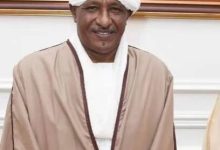
Among the names associated with this file, Anas Omar and Mohamed Ali Al-Jazouli remain the most prominent and the most surrounded by questions. Since their arrest in May 2023, the two men have disappeared completely from the public scene, despite being among the leading political figures who opposed the partnership project between the military and certain political forces before the outbreak of the war. They were also part of the current that rejected the re-engineering of the political landscape through arrangements that lacked popular legitimacy.
The two men were not merely leaders within the Islamic movement; for their supporters, they represented symbols of resistance against what was considered at the time a project aimed at hijacking the Sudanese state and reshaping it outside the framework of national will. Therefore, their disappearance is viewed within that camp as political targeting intended to remove them from the scene at a pivotal moment in the country’s history.
However, a careful reading requires viewing the issue from a national perspective. The matter is not about agreeing or disagreeing with the ideas of Anas Omar or Mohamed Ali Al-Jazouli, but rather about the right of any political actor to protection from abduction and enforced disappearance. When the silencing of opponents becomes a means of managing political conflict, the danger threatens not one particular current, but political activity as a whole.
As the ambiguity continues, several hypotheses have emerged regarding the fate of the two men. The first hypothesis is that they are still alive and are being held as a deferred political card, especially given the political value they represent within the Islamic movement.
The second hypothesis suggests that they may have been subjected to harsh detention conditions that led to their complete isolation from the outside world, preventing the leakage of any accurate information regarding their situation. The third hypothesis, and the most tragic, is linked to the possibility that they were executed or died during detention. Although this hypothesis still lacks conclusive evidence, it remains plausible due to the absence of information.
Amid all these possibilities, the question remains: Why has the international community and human rights organizations failed to exert sufficient pressure to uncover their fate and the fate of thousands of other detainees? Why do some cases of enforced disappearance appear to receive greater attention on the international agenda than others? Likewise, why did national judicial institutions fail to act on this issue at an earlier stage, given that the file has remained open since the outbreak of the war in mid-April 2023?
The real danger lies not only in the continuation of detention or disappearance, but also in the transformation of these cases into part of the deferred memory of war. Comparative experiences confirm that countries emerging from conflict cannot build sustainable peace unless they uncover the truth about the fate of the missing and the forcibly disappeared. Therefore, the issue of prisoners in Sudan is not merely a humanitarian and moral matter, but one of the most important transitional justice files that any national authority will face in the post-war period.
According to our view in #Truth_Perspective, Sudan’s battle has gone beyond the limits of territorial control to become a struggle over restoring the value of human beings, their dignity, and their right to freedom and security. States are built not only through victories, but through their ability to safeguard rights and end the cycle of fear, enforced disappearance, and the shadow prisons of oblivion. From this standpoint, the issue of prisoners and detainees, foremost among them Anas Omar and Mohamed Ali Al-Jazouli, remains a matter that transcends individuals and constitutes a genuine test of the seriousness of any project for justice, peace, and security, as well as for the future of a state seeking to consolidate its existence on the foundations of law, citizenship, and human dignity.
Wishing you continued health and well-being.
Tuesday, June 23, 2026
Shglawi55@gmail.com