
Face of Truth | Ibrahim Shaqlawi Between Chaos and Re-establishment..!

The events that crowded the Sudanese scene at the end of last week appeared as if they were a theatrical performance whose acts had not yet been completed: a resignation, controversial tenders, conflicting statements, nominations within the Sovereignty Council, and lingering questions about public funds. When these facts are read and interpreted in a unifying context, they raise a fundamental question: Are we witnessing the management of chaos? Or the labor of re-establishing a state searching for its new form after the war?
It was not an ordinary week, given the density of its events, which diverted public opinion—deliberately or by coincidence—from the transformations in Sudan’s regional and international environment, related to the future of war and peace. It was as if the domestic arena was immersed in a carefully orchestrated administrative and political debate, while more sensitive files moved in the background.
The controversy began with the maintenance and rehabilitation tender for the Halfaya Bridge. The question was not about the bridge itself, but about the methodology by which public contracts are managed in wartime.
How was the tender awarded? What were the technical and financial criteria? And why are the bidding documents and evaluation results not published? In a state suffering from scarce resources and engaged in an existential war, transparency is not an administrative luxury but a moral condition for the survival of trust.
Then came the resignation of Sovereignty Council member Dr. Salma Abdeljabbar over the Khartoum State lands file, which led to the suspension of a government employee.
This brought back to the forefront a principle long absent: accountability. In its deeper meaning, resignation is not a personal event but a test of the idea that public office is not permanent immunity. However, the resignation did not end the questions; it expanded them: How are major files managed? How are procedures protected? Who exercises oversight?
The facts accumulate to reveal a single dilemma: the civil service functions, but without sufficient institutional protection; spending occurs, but without full clarity; contracts are concluded, but without open competition; and the public is asked for trust without being granted knowledge. War may justify exceptional measures, but the danger is that exceptions become the rule, and that “necessity” is redefined as a gateway to erasing integrity and transparency.
Statements by Lieutenant General Engineer Ibrahim Jaber, in which he denied the dissolution of the Committee for Preparing the Environment for Returning to Khartoum, asserting that what occurred was a temporary suspension, sought to draw a clear line between the committee’s role and that of the Ministry of Finance. However, citizens do not see separate institutions; they see a single responsible state. Any lack of transparency in one part of the system reflects on the trust in the entire state structure and its administration.
Discussion about renting offices with foreign currency, aircraft fuel contracts, and vehicle purchases reveals that the issue is not a specific project but an entire structure for managing public funds. The absence of information not only opens the door to suspicion but also weakens the moral capital the authority needs during wartime.
Behind these facts emerges a latent struggle over powers within the executive apparatus, following Decision No. (13), which prohibited ministers from participating in certain meetings or committees.
The decision appears organizational on the surface, but in essence reflects a crisis of trust and an attempt to redraw the balance of influence. The question here is not about committees but about who holds the decision-making power and who is excluded from its narrow circles.
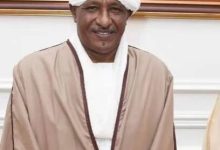
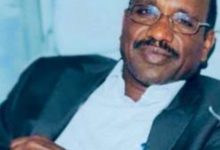
The debate then moved from files to people, with potential alternative names circulating for membership of the Sovereignty Council, including Al-Hindi Ezzeldin, Mariam Al-Sharif Al-Hindi, and Abu Aqila Kikel.
The objection is not to the names, but to the methodology governing nominations. The sovereign position is neither a reward nor an extension of fame or connections; it is a decision-making role that requires academic qualification, institutional knowledge, constitutional familiarity, and the ability to read political and economic complexities.
Placed in a single context, these issues outline a tense scene: a state waging war, experiencing a silent struggle within its apparatus, while public opinion is occupied with events managed in a way that distracts from the essence of the battle. The problem is not the debate itself but the absence of frameworks that make it productive, and the lack of transparency in institutions that could turn criticism into an opportunity for reform rather than fragmentation.
In parallel with this internal debate, Sudan was moving externally. Prime Minister Kamel Idris’s participation in the Munich Security Conference, the presentation of the “Sudan Peace Initiative,” the country’s return to IGAD, and efforts to lift the suspension of its membership in the African Union are all indicators of a drive to reposition regionally and internationally. This coincided with discussions of a potential ceasefire agreement during Ramadan, decisive military advances in Kordofan, and the gradual reopening of Khartoum Airport, educational and health institutions, and embassies.
The paradox, according to #Face_of_Truth, lies in a state that markets stability and openness externally, but internally is unable to provide a transparent model for managing its affairs. Trust is built through accountable institutions and clearly managed public funds, not through speeches and promises. If this phase is not leveraged to re-establish the relationship between authority and society based on transparency and governance, the chaos that led us to war will continue. As political philosophers say: states do not collapse when they fail to build, but when people lose the ability to believe in them.
Wishing you wellness and safety.
Saturday, 14 February 2026
Shglawi55@gmail.com
If you like, I can also produce a clean formatted version ready for publication in English that preserves the journalistic and analytical tone. Do you want me to do that?