
Truth Perspective | Ibrahim Shaglawi Al-Burhan and the Question of the Lean Years

When we contemplate the Sudanese scene today, it is difficult to view the past seven years as merely an ordinary period of governance in the country’s history. They have been exceptional years by every measure—years in which revolution intertwined with transition, politics with disappointment, and hope with frustration, until the situation culminated in a war that threatened the very existence of the state. Therefore, the question facing President Al-Burhan today is not merely the question of a man; rather, it is the question of an entire era, and the question of a state that is still losing its way.
In the Sudanese collective consciousness, and in the Qur’anic memory evoked by the phrase “the lean years,” this expression is not associated solely with hunger, but with trial and testing. The lean years in the story of Prophet Yusuf (Joseph), peace be upon him, were not merely an economic crisis; they were a test of political wisdom, sound governance, and the ability to prepare for the future. The way out was not a miracle descending from heaven, but the result of a vision that preceded the crisis, understood its consequences, and dealt with them wisely.
From this particular perspective, Sudan’s experience since 2019 can be understood.
The country entered that phase carrying great hopes for building a new state, but what happened in practice was a transition from one crisis to another. The political partnership faltered, trust between civilian and military forces eroded, external interventions increased, and state institutions retreated before the expansion of informal centers of influence, until the country reached the moment of the great explosion in April 2023.
Perhaps the paradox is that the war not only revealed the magnitude of the threat posed by the militia, but also exposed the weakness of the political structure that emerged after 2019. Within a matter of days, many illusions that had dominated political discourse for years collapsed. The illusion that balances could replace institutions collapsed. The illusion that temporary partnerships could establish stability collapsed. The illusion that the international community could produce a national state on behalf of its people collapsed. One truth remained: the Sudanese state endures through institutions, not through temporary alliances.
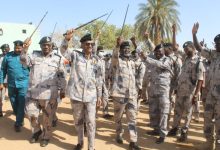
At the heart of this equation, Al-Burhan has remained the most important political and military actor in the country. The man succeeded in leading the military institution through the most dangerous existential threat faced by the Sudanese state since independence, and the armed forces succeeded in preventing the collapse of the state and turning the project of seizing control of it into a failed project.
On the other hand, it cannot be ignored that Al-Burhan has held the reins of power throughout these years, making any assessment of the entire period directly linked to his political performance and his ability to manage the state, not merely the war.
For many years, Al-Burhan’s name has been associated with an approach that he himself once described as “digging with a needle.” This phrase reflected a political philosophy based on gradualism, patience, avoiding confrontations, and working within the available balance of power. Such an approach may have been understandable within the context of a contested transitional period, where the primary objective was to prevent confrontation and manage contradictions with the least possible losses.
However, the war fundamentally changed the nature of the equation. The Sudan that emerged after April 2023 is not the same Sudan that preceded it. The state underwent an existential test, society paid a heavy price, and the political and security landscape was radically reshaped. In such historical moments, the tools designed to manage delicate balances are no longer sufficient to manage major transformations. Digging with a needle may be effective in untangling knots, but it is not enough on its own to build a new state or launch a national project commensurate with the challenges produced by the war.
Hence, the important question is whether these years succeeded in building the state. Reality indicates that essential institutions are still absent. The legislative council has yet to see the light of day. Oversight and accountability mechanisms remain limited in effectiveness. Many of the commissions that are supposed to form the pillars of the transitional period have not completed their structures. The national economy continues to suffer from imbalances and disorder.
During these years, the Sudanese people have made enormous sacrifices. They endured economic hardship, bore the burdens of displacement and refuge, and stood behind state institutions in a moment of existential danger. They have the right today to ask: Has the ruling elite risen to the level of those sacrifices? Have the bloodshed and suffering of the conflict been transformed into awareness? Or is Sudan still revolving within the cycle of crises?
History does not judge leaders solely by their ability to overcome challenges, but by their ability to use crises to shape the future. Winston Churchill, who led Britain to victory in the Second World War, remained associated with military triumph, yet the British people chose another leadership to manage the reconstruction phase. This was not a diminishment of his role, but rather a recognition that the logic of war differs from the logic of state-building.
From this perspective, according to Truth Perspective, the significance of the lean years does not lie in the fact that they were years of hardship, but in whether they laid the foundation for years of prosperity and recovery. History does not immortalize crises; it immortalizes the visions that overcome them. Yusuf’s vision triumphed over famine and created a new future. The place of this period in our history will be determined by its success in transforming sacrifices into a state, victories into development, and crises into a promising future.
Wishing you continued health and well-being.
Saturday, June 12, 2026
Shglawi55@gmail.com