
The Face of Truth | Dr. Ibrahim Shaglawy The Drama of Sudanese Dialogue

After wars come to an end, recovery becomes essential. Political settlements, regardless of the degree of consensus surrounding them, are not sufficient on their own to repair societies torn apart by conflicts. War has reshaped collective memory, weakened trust among the components of society, and generated patterns of fear, hatred, and mistrust. These transformations cannot be addressed through conventional political tools alone; rather, they call for cultural approaches capable of reaching consciousness and rebuilding national bonds.
Therefore, the initiative proposed by drama practitioners during their meeting with the Sudanese-Sudanese Dialogue Preparatory Committee last week carries particular significance, as it seeks to develop accompanying activities to support the dialogue. It also raises an important question about the nature of peace the country needs: Is it enough for political forces to agree on the future of power, or do we also need to rebuild the relationship between citizens and society, and restore the human and national bonds that have been fractured, in a way that rebuilds social awareness around issues of unity, peace, and reconstruction?

The call to move dialogue from the halls of the capital to the states and localities, through theatre, radio, television, and social media platforms, represents an attempt to move dialogue beyond its elite-centered nature into the broader social sphere. Society is not an audience that merely receives the outcomes of negotiations; rather, it is an essential partner in producing national consensus. From a theatrical perspective, taking dialogue into local spaces means moving from a closed stage where elites monopolize the conversation to an interactive space in which citizens become partners in raising questions and shaping meaning.
Perhaps the strength of drama lies in its ability to transform ideas into tangible human experiences. It does not merely deliver direct messages about tolerance and acceptance of others; it also creates characters, situations, and tensions that reveal the contradictions of reality and confront audiences with questions that political speeches may fail to provoke. Herein lies the importance of dramatic structure. Conflict on stage is not merely a confrontation between characters; it can become a simulation of society’s conflicts and an opportunity to reconsider the prejudices and stereotypes entrenched by war.
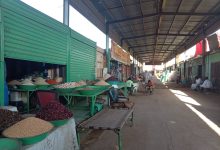
Street theatre, in particular, assumes special importance within this initiative because it breaks the traditional barrier between performance and audience, turning public spaces into arenas for dialogue and interaction. Markets, transport stations, and cultural centres are not merely venues for performances; they are social spaces that can be transformed into platforms for discussion and the restoration of human connections. Radio and television drama also make it possible to expand the audience and reach communities that are difficult to access, including areas affected by war, whenever conditions permit.
However, the use of drama should not be reduced to producing works that carry ready-made messages about peace. Serious artistic treatment requires a deep understanding of the nature of conflict, the creation of characters that reflect the complexities of reality, and the avoidance of directness and preachiness that weaken a work’s aesthetic and persuasive impact. A successful dramatic work does not dictate what the audience should think; rather, it places them in an experience that leads them to reconsider their attitudes towards others. This is the dividing line between artificial artistic propaganda and creative drama as an instrument of social change.
In this context, actress and director Zakia Mohammed Abdullah noted that a committee representing drama practitioners had been mandated during a meeting attended by 260 male and female drama practitioners, alongside preparations for a comprehensive conference featuring academic papers and practical projects. Drama practitioners’ representative Mohammed Mahdi Al-Fadni called for taking dialogue to the states through interactive theatre, street theatre, radio, and television. Yet the real challenge remains transforming these initiatives into a project that responds to communities’ needs and gives artists in the states a role in shaping its message.
This highlights the need for an independent dramatic discourse that becomes a space for embracing diversity, restoring trust, and rebuilding national cohesion and the social fabric. Drama contributes to reconciliation through its ability to dismantle stereotypes, respect the memory of victims, and revive the shared human values that bring Sudanese people together.
The challenge is not limited to addressing the consequences of war; it extends to dismantling the political and social structures that produced it, from identity and power struggles to inequalities in justice and the mismanagement of diversity. Tolerance without justice reproduces grievances, while dialogue without community participation remains an elite consensus.
Politics, culture, and justice must therefore complement one another. Drama restores awareness, dialogue builds consensus, and justice lays the foundations for sustainable reconciliation. What is needed is not merely the restoration of peace, but addressing the roots of war and drying up the sources of its recurrence.
From the perspective of #The_Face_of_Truth, drama is not merely a means of conveying the message of dialogue; it is a tool for understanding society and strengthening the shared values of the nation. Politics shapes agreements, but art tests their credibility in people’s hearts and minds. When citizens become partners in writing the script, the restoration of trust in the state begins. Sudan does not merely need to bring the curtain down on the scene of war; it needs to write a new national scene in which people shape their future rather than remain victims of their history.
Wishing you continued well-being.
Wednesday, 11 November 2026
Shglawi55@gmail.com