
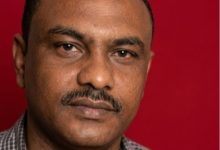
We All Stand with the Spirit of the New Sudan — But How? _Captain Mohamed Hassan Al-Tahir

_Date: October 27, 2025_

At a historic crossroads, Sudan today faces an existential challenge:
– How do we rebuild a nation worn down by conflict, torn by competing visions, and battered by waves of hope and despair?
The answer lies not in slogans, but in:
– A radical rethinking of foundational concepts,
– Awakening the latent spirit within law and history,
– And activating the tools of philosophy and the science of principles to ignite minds.
—
*🧠 Philosophy and the Redefinition of Concepts*
In the new Sudan, we need a philosophy that redefines the concepts of state, freedom, justice, and belonging.
Philosophy is not a luxury of thought; as Gilles Deleuze described it, it is _the art of creating concepts_. It:
– Reshapes questions before seeking answers,
– Invents tools to understand reality,
– Serves as a bridge between abstraction and practice, between text and spirit.
—
*📜 History: The Manifestation of Spirit in Time*
Hegel believed that:
– History is not mere events, but the unfolding of spirit in the world,
– Each historical phase represents a development in human self-awareness and freedom.
From this perspective, Sudan’s history is not just a chronicle of events, but a collective journey toward liberation and dignity.
Understanding this interpretive dimension of history empowers us to read the present and envision the future.
—
*⚖️ Law: A Mirror of the Public Spirit*
In _The Spirit of the Laws_, Montesquieu connects law to the cultural and social environment. Law is:
– Not rigid texts, but an expression of the public spirit of a nation,
– It must reflect the values and principles that shape a society’s identity.
In the new Sudan, law should be a tool of justice, not an instrument of domination.
It must not be imposed from above, but emerge from the people’s conscience and embody their aspirations and spirit.
—
*🌬️ Spirit: The Essence of Consciousness and Source of Meaning*
In philosophy, spirit is not a mystical notion, but:
– The essence of collective consciousness,
– The source of meaning in history and law.
For Hegel:
– Spirit evolves and realizes itself through the state.
For Montesquieu:
– It is what distinguishes each nation and shapes its laws.
Philosophy gives spirit a voice and interprets its manifestations in reality.
In the new Sudan, we must reclaim the authentic Sudanese spirit—one that:
– Resisted colonialism,
– Defied tyranny,
– And pursued freedom and dignity.
—
*🏛️ Reason in the Movement of History*
Hegel asserts:
– History is not chaos, but a rational movement toward freedom,
– The state is the embodiment of reason in reality.
Thus, the new Sudan cannot be built on randomness or emotion, but on historical and philosophical awareness that reshapes society and the state according to the values of freedom, justice, and human dignity—values upheld by all religions.
—
*📚 The Science of Principles: A Method to Ignite Minds*
We are a Muslim people, guided by the words of the Prophet ﷺ:
_”A Muslim is one from whose tongue and hand other Muslims are safe.”_
The science of principles—whether in jurisprudence or grammar—is a discipline of methodological thinking. It teaches us:
– Logical analysis of texts,
– Deductive reasoning and analogy,
– Intellectual effort in understanding rulings and meanings,
– The connection between language and thought, between the apparent and the hidden.
In the new Sudan, we need a principled philosophical mindset that:
– Liberates thought from stagnation,
– Rebuilds the human before the structure,
– Opens minds to contemporary issues and contributes to human and societal advancement.
*✨ Conclusion: From Slogans to the Crafting of Meaning*
The new Sudan will not be built on slogans, but on enlightened minds, free spirits, and concepts that reshape reality.
It is a philosophical project par excellence, requiring:
– Awareness of history,
– Understanding of spirit,
– Creativity in concepts,
– And a disciplined method of thinking.
Let the new Sudan be a manifestation of a free spirit, a critical mind, and a will that crafts meaning rather than merely consumes it.