
The Face of Truth | Ibrahim Shaghlawi Freezing Political Parties… or Freezing Failure?

In Sudanese politics, apology is no longer an exceptional event; rather, it has become a delayed attempt to catch up with history after its owners have already left the platform of influence. Therefore, when someone comes forward announcing his departure from the National Congress Party, or offering an apology for a past political experience, the question is: what does he actually possess to apologize for in the first place?
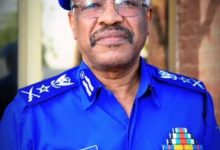
In my estimation, Engineer Abdul Jabbar Hussein does not appear to carry the political weight that would make his departure from the party an event worthy of all this discussion, as happened in one of the groups. Certainly, this is not to diminish the man, but because Sudanese politics has, over recent years, become crowded with delayed positions, reviews that came after the stage lights had dimmed, and claims that did not rise to the level of historical responsibility in the first place.


And if there is an apology that Sudanese people truly deserve to hear, it is not an apology for a membership card, or for a political phase, but rather an apology for the national projects that were once elevated to the status of a dream, only to end up in the archives of disappointment and betrayal.
At the forefront of that stands the “Agricultural Renaissance” project, a project that was once presented as Sudan’s gateway to self-sufficiency, and the restoration of its natural place as the food basket of the region. At that time, the project lacked neither political support, administrative backing, financing, nor declared will from the country’s leadership at the time. Resources were mobilized for it, doors were opened for it, and it was presented to public opinion as the project of a future generation.
But what happened later was a harsh lesson in how great opportunities are lost. The project declined from a strategic vision that was supposed to reshape the national economy, into merely a media title, and then ended in the memory of Sudanese people as a television program on the national broadcaster called “Sanabil.” The land remained as it was, the farmer remained as he was, and the crisis remained as it was… only the slogans and promises kept changing.
So if there is an apology, let it be for a homeland exhausted by promises. Let it be for dreams that were announced in the name of development, only to end in the corridors of bureaucracy, weak implementation, and the absence of accountability and law.
As for the talk about freezing political parties that has been circulating, it is in fact not a new idea, as much as it is a natural reflection of a state of disorientation and an accumulated loss of trust over the years. Since independence, many Sudanese parties have spoken in the name of the homeland, yet in many tests they failed to build the state, protect national decision-making, or produce a political project that transcends individuals toward institutions.
I have addressed this issue previously in a number of articles, most notably the article “How the Parties Handed Over Sudan,” within The Face of Truth series, where we discussed in detail how some partisan forces transformed from tools for building the state into tools for demolishing it. With every crisis, divisions multiplied, alliances shifted, and external forces found a foothold within internal conflict, until the country reached a stage where some parties began competing to please foreign powers.
Then came the current war to expose the fragility of the scene in an even harsher way. A war that has not left a single home untouched, nor a city without devastation, nor a citizen without taking from him something of his peace of mind or his future. At the heart of these disgraces, the party question appeared more urgent than ever: where were these parties? And what did they offer Sudanese people other than statements, alignments, and exchanges of accusations?
From here, the discussion about freezing political parties should not be understood as a call to abolish politics, for nations are not governed without politics, nor built without organization, nor stabilized without pluralism. But the more important question is: do we need parties in their current form, or a complete re-establishment of the very idea of partisan work itself?
In my estimation, Sudan no longer needs merely a change of faces, but rather a radical review of the entire political structure—a review that begins with defining the party, its function, its sources of funding, and its relationship with society, the state, and external actors.
The irony is that the crisis today, according to #The_Face_of_Truth, is no longer in the individuals who leave parties, apologize for them, or review their experiences with them, but rather in the parties that abandoned the homeland and the people’s hopes for pluralism and democracy, and abandoned their own idea before their members abandoned them. Therefore, perhaps Sudan today does not need to freeze political parties as much as it needs to freeze failure—failure of the political mind, failure of developmental projects, and failure of elites who became addicted to speaking in the name of the people while leaving the people alone to face history.
Wishing you continued health and well-being.
Tuesday, May 5, 2026
Shglawi55@gmail.com