
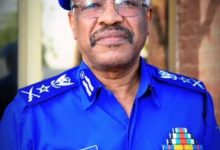
Sudan of Tomorrow: Towards a New Dawn of Awareness and Reconstruction* _Captain Mohamed Hassan Al-Tahir

Amid the sweeping transformations Sudan is undergoing, there emerges a pressing need for an intellectual discourse that:


– Reshapes collective consciousness,
– And lays the foundation for a future vision that elevates human dignity and is grounded in the values of truth, justice, and knowledge.
From this standpoint, we draw light from the language and the Qur’an, seeking meanings that help us sketch the features of _Sudan of Tomorrow_, especially when sounds intersect and meanings diverge between certainty and possibility.
—
*”Qad” in the Qur’an*
The word _”Qad”_ appears in *more than four hundred instances* in the Holy Qur’an. It is used:
– With the past tense to indicate *certainty*, as in the verse: _“Qad aflaha al-mu’minoon”_ (Indeed, the believers have succeeded), affirming their success.
– With the present tense to indicate *possibility, approximation, or certainty*, depending on the context.
This semantic diversity reflects:
– The flexibility of the Arabic language,
– And its capacity to express the subtlest emotions and expectations.
This is precisely what we need in our new national discourse: a rhetoric that balances between:
– *Certainty* and *possibility*,
– *Reality* and *aspiration*.
—
*”Khalaqa” and “Kharaqa”: When Sounds Align but Meanings Diverge*
In Arabic, the words _”Khalaqa”_ (to create) and _”Kharaqa”_ (to tear) are phonetically similar, each composed of three consonants and vowels in a similar pattern. Yet semantically, they diverge:
– *Khalaqa*: Signifies creation from nothingness, order, and innovation—divine in essence.
– *Kharaqa*: Signifies violation and transgression, breaking and chaos.
This contrast symbolizes the crossroads at which Sudan stands:
_Either we create a new reality,
Or we tear apart what remains of our national fabric._
—
*Designation and Connection: The Paradox of Demonstratives and Relative Pronouns*
– *Demonstrative pronouns* (e.g., _this_, _that_): Used to point to a specific entity in time or space—tools of _designation_.
– *Relative pronouns* (e.g., _who_, _which_): Used to connect clauses—tools of _linkage and elaboration_.
In the project of _Sudan of Tomorrow_, we need:
– Demonstratives to say: _This is the path_,
– And relatives to say: _What we seek is peace and justice_.
Together, they form the linguistic tools for constructing a national narrative.
—
*”Qad” and “Tomorrow”: The Dialectic of Possibility and Aspiration*
– *”Qad”*: Denotes _possibility or realization_. It is a linguistic marker that stands at the threshold of the present, looking back at the past and forward to the future.
– *”Tomorrow”*: Represents _the time to come_, a symbol of hope and transformation.
When we say:
_“Qad yooladu al-ghad min rahim al-mu‘anah”_
( _Tomorrow may be born from the womb of suffering_),
We are linking:
– *Reality* with *aspiration*,
– *Awareness* with *action*.
Thus, _”Qad”_ grants us hope,
And _”Tomorrow”_ gives us purpose.
—
*Towards a Renewed and Healed Sudan*
_Sudan of Tomorrow_ is not merely a dream—it is a linguistic, intellectual, and political project.
We must craft a new discourse—one that does not tear our social fabric, but reweaves it anew.
We must use:
– _”Qad”_, not to justify the past, but to affirm the possibility of change.
– We must point to the path, and connect generations through _”who”_, _”which”_, _”that”_, and _”what”_.
_Sudan of Tomorrow is the one we desire. It is the very one we are creating today—not the one we await tomorrow._
But the question remains:
*Can we truly create this tomorrow, or are we still lingering on the threshold of “Qad”?*