
The Truth Angle | Ibrahim Shaglawi Sudan Between Three Fronts…

On the anniversary of April 6, President Abdel Fattah al-Burhan reaffirmed the resilience of the Sudanese experience throughout its long history, linking the army’s positions in 1985, 2019, and the 2023 Battle of Dignity. This speech provides a framework for understanding the central role of the Sudanese Armed Forces in safeguarding the country’s sovereignty and unity amid a complex landscape of internal, regional, and international conflict.
Al-Burhan’s choice of this occasion to address the people carries significant political symbolism, representing a deliberate recall of a pivotal moment in Sudanese history.


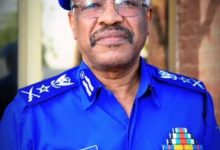
This day, associated with the overthrow of Jaafar Nimeiri’s regime in 1985 and the army’s alignment with the popular uprising, remains a model of convergence between popular will and the military institution.
It also reinforces the notion that, in times of major transformation, the army does not detach from the national mood, but rather moves within it as a guardian of stability and state unity.
Within this context, the speech reconstructs a continuous narrative linking different milestones along a single trajectory, where the moment of national alignment recurs whenever the state faces an existential threat. Here, April 6 is employed as a political instrument to redefine the current conflict as a battle over the survival of the state, where the convergence between the people and the army becomes a necessary condition for protecting the country from fragmentation and external pressures.
Sudan today stands at the intersection of three overlapping fronts: an internal front, cohesive in the unity of the armed forces with civilian forces and popular resistance to protect the state and defeat the rebellion; an external front where regional and international actors seek to exploit the crisis; and a border front shaped by calculations of security and influence. The resilience of these three fronts depends on the integration of national will with military capability to safeguard sovereignty and national unity.
Internally, the fall of the previous regime did not produce a cohesive national project, but rather created a troubling vacuum exploited by political forces seeking power through the use of the Rapid Support Forces militia to serve external agendas. In contrast, the Sudanese army, under al-Burhan’s leadership, emerged in coordination with popular resistance and national forces as a solid defensive محور that restored balance. This was not coincidental, but the result of a conscious and attentive management of the nature of the conflict, supported by a popular base that preserved national sovereignty.
Al-Burhan’s speech reveals that strength lies not in weapons alone, but in the military institution’s ability to invest popular alignment in favor of protecting the state and the unity of its people. The army, through its extended history across different phases, has proven capable of defending the country, while popular resistance enhances this effort to counter projects aimed at dismantling the state and controlling its resources.
On the external front, the debate surrounding the Berlin Conference and international support initiatives highlights the awareness of Sudanese national political forces regarding their strategic role in safeguarding the country’s sovereignty and unity. These forces, supportive of Sudan’s unity and the army in confronting the rebellion, chose to boycott the conference, considering the invitations unbalanced and excluding key participants from Sufi orders, tribal, community, youth, and women’s leadership—thus weakening any genuine national consensus.
This stance reflects an important understanding that any external intervention, even if it begins on humanitarian grounds, can evolve into political cover for reproducing forces that sought to seize power. Real solutions, therefore, must stem from national will, while ensuring civilian protection and the provision of humanitarian support.
The speech also indicates that true sovereignty is preserved through the state’s ability to protect its people and manage external support in a way that serves national interests—without rejecting international cooperation or overlooking humanitarian suffering. This balance demonstrates how external support can be utilized without compromising decision-making, reflecting maturity in managing challenges.
The popular scene reflects national awareness. The protests witnessed in the French capital, Paris, on Tuesday against leaders of “Sumoud” linked to the Rapid Support Forces highlight Sudanese societal rejection of any attempt to manipulate its political and humanitarian suffering. The chants directed at those leaders, such as “For how much did you sell the blood?” embody public anger toward anyone who sought to turn the crisis into a tool for personal or partisan gain. This popular rejection constitutes a continuous pressure factor compelling all actors, domestically and internationally, to acknowledge the realities on the ground.
In the security and border dimension, the meeting of the Director of Sudanese Military Intelligence, Lieutenant General Mohamed Sabir, with the Chief of Staff of the Libyan Army in Tripoli reflects a strategic awareness of the importance of fortifying the western front through security coordination and intelligence exchange. This enhances the state’s ability to curb arms flows and confront cross-border threats, revealing an understanding that sovereignty protection is no longer purely military, but a combination of firm security measures and smart preventive diplomacy.
Amid all these fronts, emphasis emerges on internal legitimacy, which underscores the necessity of rebuilding trust between the public and political elites. Al-Burhan’s speech reflects a deep understanding that the army and the people, together, form the fundamental pillar of the state’s unity and continuity, and that any political project must operate within a framework that safeguards sovereignty and prioritizes Sudan’s interests.
From this perspective, it can be said that Sudan has managed to assert itself across its three fronts: internally, by resisting fragmentation and division; regionally, by managing its borders and security movements; and internationally, by protecting national decision-making and leveraging external support in service of its interests. The army and popular resistance have not merely been instruments of power, but a national that reconstitutes the state and preserves its sovereignty.
Today, according to #TheTruthAngle, Sudan stands before a real test: protecting its sovereignty, unifying its national forces, and restoring decision-making to Sudanese hands. The challenge is not limited to confronting external interventions, but lies in building a national political project that transforms conflict into a pathway toward peace and stability—where the state is strong and its decision is Sudanese. In this context, al-Burhan’s speech represents a national vision affirming that the people and the army together constitute the true force for the country’s future.
Stay well and in good health.
Tuesday, April 7, 2026
Shglawi55@gmail.com