
The Truth Behind the Headlines |Dr . Ibrahim Shaglawi The Dialogue Preparatory Committee… Towards Managing the Dialogue?

Through my monitoring of the work of the Sudanese Dialogue Preparatory Committee, it is clear that the committee has built up a significant record of contacts with political and societal forces and broadened its engagement with regional and international parties. This progress places the committee before the necessity of moving from the preparatory phase to managing the dialogue, by transforming what has been achieved into a clear political process with defined stages and timelines, based on a roadmap that moves the dialogue from intentions to action, and from contacts to results.

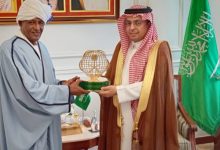
The committee’s contacts with the African Union, the European Union, the United States of America, and the Quintet have been successful, alongside engagements with a number of Arab and European countries. The invitation extended by the President of Burundi, the current Chairperson of the African Union, for the committee to visit his country, coinciding with his presentation of an initiative for a political solution, represents an opportunity to strengthen consultations. However, the significance of this success remains contingent on its ability to support a national process owned by the Sudanese, who determine its priorities, stages, and outcomes, while making use of external support without compromising the independence of the country’s decision-making.
External support is necessary, but it cannot create consensus on behalf of the Sudanese, just as numerous meetings do not necessarily mean that the dialogue is drawing closer. The real challenge, therefore, is to transform the outcomes of consultations into common ground among political parties and entities, enabling a transition towards managing differences and building consensus.
From my perspective, this does not require abolishing the existing committee or bypassing its mandate, but rather developing it through a preparatory phase with a defined timeframe, during which the necessary political and organizational arrangements are completed, with the assistance of independent and trusted figures who have experience in managing disagreements and enjoy respect and acceptance. The framework should then expand during the management of the dialogue to include representatives of political blocs, societal forces, and other entities, according to announced criteria that ensure meaningful participation and balanced representation.
In my assessment, one of the most prominent challenges lies in the possibility that some political forces based abroad may join the dialogue individually, potentially leading to divisions within their own constituencies or reproducing the polarization that weakened previous experiences.
Therefore, the committee’s commitment to accommodating everyone and providing them with space to reach understandings represents a political necessity. Inclusiveness does not simply mean having a large number of participants; it also means ensuring sound representation and their ability to express the views of their constituencies without fragmenting them. What is required is to strike a balance between broadening participation and preventing the process from becoming hostage to indefinite waiting.
To achieve this, I propose that the committee adopt an implementation roadmap that begins with completing the preparatory phase within an announced timeframe, by mapping the positions of political and societal forces, identifying areas of agreement and disagreement, and opening channels of communication with parties that have not yet made a final decision on participation. This should be followed by a preparatory phase responsible for establishing representation criteria, the dialogue agenda, rules for conducting sessions, decision-making mechanisms, and participation guarantees. These arrangements must be completed by a specified deadline rather than turning into another round of consultations.
The dialogue should then begin according to an announced timetable and an agenda that prioritizes issues ranging from addressing the humanitarian crisis to peace, justice, the return of internally displaced persons and refugees, reconstruction, and the future of the state. It is not enough for the dialogue to conclude with a political statement. Its outcomes must instead be translated into an agreement containing specific commitments, clearly identified entities responsible for implementation, deadlines, and an independent monitoring and evaluation mechanism, alongside the publication of periodic reports that strengthen transparency and accountability.
The committee is keen to create the conditions for political forces to participate collectively, in order to avoid divisions that could undermine the chances of the dialogue succeeding. However, this commitment should not become a condition that delays the launch of the dialogue or makes it dependent on the return of those who decline to participate. The participation of some forces can provide a starting point that gradually expands, while keeping the door open to others according to announced rules. Inclusiveness is a necessary goal, but it does not justify indefinite waiting under circumstances that cannot afford further delay. What is required is a balance between broad participation and adherence to a defined timeframe for the dialogue and its outcomes.
The dialogue must also not remain confined to political elites. Young people, women, internally displaced persons, refugees, and local communities are integral stakeholders in Sudan’s future, and their needs should be reflected in the agenda. Ownership of the dialogue is achieved when citizens and their various constituencies have the ability to influence its issues and outcomes. Holding the dialogue inside the country also strengthens its national ownership and its connection with citizens.
Preparations that do not lead to dialogue lose their purpose, and dialogue whose outcomes are not accompanied by implementation loses its meaning. Today, our country needs a political process that brings together all parties without exclusion, lays the foundations for peace on the basis of inclusiveness and national ownership, and transforms consensus from a political promise into a commitment that can be implemented and held accountable.
According to #The_Truth_Behind_the_Headlines, the Preparatory Committee now stands before an opportunity to move from managing contacts to managing the political process, and from preparation to managing the dialogue. What is needed now is not a new committee, but a roadmap that defines the stages, responsibilities, and timelines, and links every step to a tangible outcome. The citizen, exhausted by the war since 15 April 2023, is not waiting for structures to be completed; rather, they want to see a clear path towards restoring security and peace.
May you remain well and in good health.
Thursday, 15 October 2026
Shglawi55@gmail.com