
Face of Truth | Ibrahim Shaghlawi Maps of Blood and Treason..!

The rapid developments we are witnessing these days in the attempts to rescue the militia prompt us in this article to raise two important questions in an effort to answer them: How is the war in Sudan being managed behind the scenes? and Why have the masks fallen now?
The war in Sudan can no longer be understood as merely an internal power struggle or the result of a faltering political transition. It has become a model of a compound war, managed through a regional network in which security and geopolitical interests intersect, and in which the militia is used as a functional tool to reshape the state according to a regional vision.
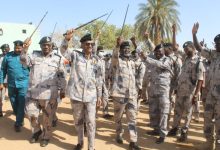
Reuters reports, broadcast yesterday by Al Arabiya and Al Hadath, stated that “Ethiopia is hosting a secret camp to train Sudan’s Rapid Support Forces, with Emirati support through funding, trainers, and logistical assistance,” while “Brown Land” revealed images of the camps. This confirms that the regional conspiracy has gone beyond mere interference to the dismantling of the political foundation upon which the international mediation framework is built.
This striking development places the mediators before an ethical and legal dilemma and embarrasses approaches that still view the “International Quad,” including the UAE, as an entry point to a solution, while renewed facts point to their involvement in feeding the war machine.
This betrayal, in its security and political dimension, extends to include Ethiopia — a state from which Sudan historically expected nothing but natural neighborliness and partnership in destiny — only to find it, according to what has been revealed, transformed into a rear platform for training fighters and facilitating crossings, in a scene that does not merely express political involvement, but a collapse in the very meaning of neighborliness and shared security.
Here, not only does the idea of “regional mediation” fracture, but the assumption of good faith upon which it was built collapses as well. It becomes clear that maps of blood are not drawn within Sudan’s borders alone, but are managed behind a curtain where interests intersect with denial, and where treason is marketed in the guise of diplomacy.
What Reuters recently revealed did not merely add a piece of information to the scene; it transferred the conflict from the circle of suspicion to the realm of evidence, and from political accusation to the logic of systematic complicity that places the war’s map in its true framework: a regional project coveting resources, feeding on chaos, and operating in the shadows.
In this context, international condemnations are no longer mere cold statements, but have become an expression of a qualitative shift in the global narrative on the war. When the European Union describes attacks on aid convoys, hospitals, and displaced persons as “grave crimes that will not go unpunished,” and when this language intersects with explicit positions from the Kingdom of Saudi Arabia, Egypt, Qatar, the Arab League, and Turkey, this reflects an implicit recognition that what is happening in Sudan is no longer a traditional armed conflict, but a direct threat to regional security.
And a deliberate attempt to reproduce chaos as an open political marketplace. This convergence of positions came as a result of intense diplomatic work that succeeded in conveying a documented picture of the nature of the militia, breaking the narrative of “two equal sides,” and redefining the conflict as a confrontation between the state and a cross-border rebellion project.
However, the map of blood is not limited to regional roles, nor is it complete without dismantling the dual internal role played by some political forces “Sumoud,” which claimed neutrality while, in reality, were objectively partners in paving the way for the Rapid Support Forces militia’s coup on April 15, 2023. These forces, which marketed themselves as a civilian mediator or a “third party,” were not outside the equation but at its core, as their discourse contributed to attempts to strip the state of legitimacy, demonize the army, and normalize the militia’s presence as a political actor, granting it the symbolic cover it needed to move from a troubled partner to an armed adversary.
This “false neutrality” was based on a dangerous strategy: redefining the conflict from a war against an armed rebellion into a “conflict between two equal sides,” under the humanitarian banner of “No to War.” This description emptied the state of its meaning, opened the door to internationalizing the crisis, and delegated to outsiders the power to determine Sudan’s future. With every statement calling for a “simultaneous ceasefire” without clear condemnation of the coup, a political equation was being entrenched that equated the bearer of state legitimacy with those who rebelled against it by force, in a precedent that undermines the very idea of sovereignty.
More dangerous still, these forces, led by Dr. Abdalla Hamdok, did not suffice with silence, but became engaged in marketing the militia’s narrative internationally through human rights and media platforms, presenting themselves as a “neutral” witness to alleged crimes, in an attempt to condemn the army through claims of chemical weapons use, while ignoring the major crime: the armed coup against the state and the violations that the militia continued to commit. Thus, the “dependent civilian” became a political bridge for the “armed violator,” in a paradox that embodies the deviation of politics when it becomes detached from ethics.
Holding this role legally accountable is not a settling of scores, but a شرط for rebuilding the political process on a national basis. A state that seeks peace cannot equate those who protect it with those who threaten its existence, nor can it recycle forces that — deliberately — contributed to legitimizing the coup and shielding it. In this context, dismantling the discourse of “neutrality” becomes a historical necessity, because it was not neutrality, but a hidden positioning within the camp of chaos, even if written in a soft and ambiguous language.
According to #Face_of_Truth, the scene is completed by three circles: a regional network that funds, an international mediation that misleads, and internal forces that justify.
Yet the exposure of the maps, the cohesion of the state, the rising of its sons to defend it, and the clarity of the national narrative all confirm that the era of deception is nearing its end, and that Sudan is reclaiming its voice and will, writing its next chapter with the ink of sovereignty, not with the blood of guardianship, treason, and betrayal.
Stay well and safe.
Wednesday, 11 February 2026
Shglawi55@gmail.com