
The Truth Perspective | Ibrahim Shqlaawi Between Manama and Cairo… How Is the Scene Being Engineered?

In politics, meetings cannot be read separately from their timing and implications, and leaks cannot be understood away from memory. In this article, we attempt to read the scene that took shape at the end of the week through the meeting of President Abdel Fattah Al-Burhan with the African Union envoy in Khartoum, the meeting of Lieutenant General Shams Al-Din Al-Kabbashi with US envoy Massad Boulos in Cairo, and the liberation of Al-Karmak, within the context of the accelerating military and diplomatic transformations, and how these developments have begun to reshape the political scene and define the features of a possible peace in our country.
The African Union’s announcement of its intention to reopen its liaison office in Khartoum, along with its envoy’s remarks yesterday about resuming the political process, cannot be separated from the recent developments on the ground, foremost among them the recapture of the city of Al-Karmak, as well as the advances that preceded it in the axes of Kordofan and Darfur. The international community recognizes that the balance of power, which previous initiatives attempted to address, has changed, and that any political process that ignores realities on the ground will not be realistic.

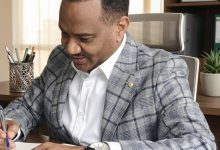
On the other hand, the leak concerning the meeting between Al-Kabbashi and Massad Boulos has brought back a question that has remained present since the beginning of the war: Who manages the negotiations? Does the state move through a single institution, or through parallel tracks imposed by the complexities of war and external pressures?
This question does not arise from the Cairo meeting alone, but rather from a political legacy that remains present in Sudanese memory, namely what became known as the Manama Agreement. At that time, leaks revealed meetings that brought Lieutenant General Shams Al-Din Al-Kabbashi together with leaders of the Rapid Support Forces militia in Bahrain. Media outlets circulated a document containing principles for a political settlement, while the Sudanese government chose silence, neither adopting the agreement nor refuting its details, which created political confusion and opened the door to the perception that there were multiple centers managing the negotiation file.
The crisis was not in the principle of dialogue itself, as wars usually end through negotiations, but rather in the ambiguity surrounding who had the right to negotiate and the limits of political authorization.
This is why the Cairo meeting gained exceptional sensitivity, because political memory immediately linked it to Manama. However, what followed the leaks this time appeared different, as information emerged confirming that the meeting took place with the knowledge of President Al-Burhan, that the Foreign Minister had officially received the American proposal one day before Al-Kabbashi’s meeting with Massad Boulos, and that Khartoum had sent its official response to the US administration through diplomatic channels.
If this account is accurate, it reflects a clear approach aimed at avoiding a repetition of the Manama confusion: that the state speaks with one voice, and that what is taking place is not parallel negotiations, but rather part of a carefully managed handling of the file.
However, the delay in presenting the official narrative until after leaks had emerged reveals a continued weakness in communication management. During times of war, information constitutes an important media element, in addition to being a component of national security, because an information vacuum is quickly filled by interpretations and exploited by other parties to fuel division and weaken confidence in state institutions.
The American move does not appear separate from this context. Massad Boulos’s statements before the UN Security Council regarding Sudan’s rejection of the American proposal, followed by official Sudanese responses, indicate that the conflict is not only about ending the war, but also extends beyond that: Who determines the shape of the next phase? And what nature will the arrangements upon which it is built take? Some international moves appear concerned with influencing the outcomes of the conflict by attempting to shape the post-war phase and the form of the coming political system, or by preserving a margin for the militia.
At the same time, the armed forces have been redrawing the military map. The recapture of Al-Karmak represents a strategic shift that narrows supply lines and strengthens control over the border strip, while the militia’s shift toward using drones and targeting civilians reflects its declining ability to maneuver on the ground.
From this perspective, the anticipated visit by African Union leadership to Khartoum can be understood, as can the field visit by UN Humanitarian Coordinator Denise Brown to Al-Obeid to assess humanitarian and service conditions after the changing realities on the ground and the decline of claims that the city was about to fall. The scene today is moving according to military developments, while regional institutions remain trapped in statements of concern and condemnation instead of moving toward humanitarian response.
What is happening today does not reflect the approach of a traditional peace, but rather a restructuring of the political scene. The United States seeks to preserve a negotiation track before the battlefield imposes new equations, while the African Union seeks to restore its role, and the Sudanese state works to consolidate its vision by combining military advances with diplomatic openness without compromising its sovereignty.
The paradox is that the escalation of battlefield victories is accompanied by increased calls for de-escalation, because mediation efforts usually move when the balance of power begins to shift and when it becomes difficult to reproduce old negotiation equations.
According to #TheTruthPerspective, the scene is no longer about the end of the war alone, but about the conditions of the peace that will follow. Between Manama and Cairo, the features of a new phase are taking shape, testing the state’s ability to unify its decision-making and manage its future from a position of sovereignty. If the battlefield has rearranged the balance of power, then the peace equation can only be safeguarded by Sudanese themselves. They are the ones who have the right to shape their country’s future and steer the settlement process in a way that preserves the state and prevents the crisis from being reproduced through new tools. True peace is not imposed from outside; rather, it is created by a conscious national will that understands what the war has ended and what must be built afterward.
Wishing you health and well-being.
Thursday, 9 July 2026
Shglawi55@gmail.com